

Focus and people
Body doubling: why studying next to someone works

Body doubling means doing your work with someone else there, even if they're working on something completely different. Having another person working next to you makes it easier to start and harder to quit early.
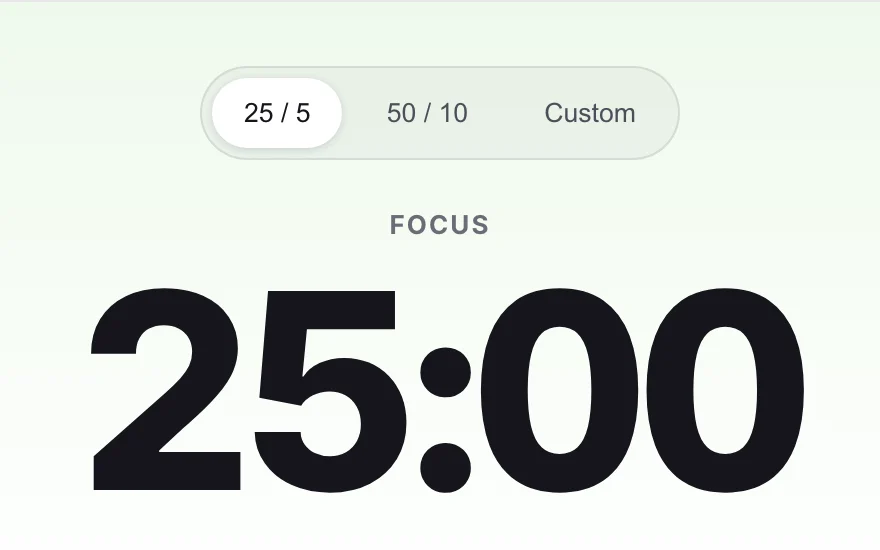
It only works if you both actually work. Set the rules first: phones off, say what you'll finish before the break, and check in when the timer goes off.
What body doubling is
You and a friend sit down at the same table. You're doing chemistry, they're writing a paper. Nobody's teaching anybody. You're just both working, at the same time, in the same place. That's it.
It's not a study group, and it's not a study date. A study group works on the same material together. A study date is mostly talking. Body doubling is quiet, side-by-side work.
Why it works
Research on body doubling itself is thin. But psychologists have studied the effect of other people on how we work for decades: when a task is something you already know how to do, having others around tends to make you do more of it.
How to set it up
When you can't be in the same room
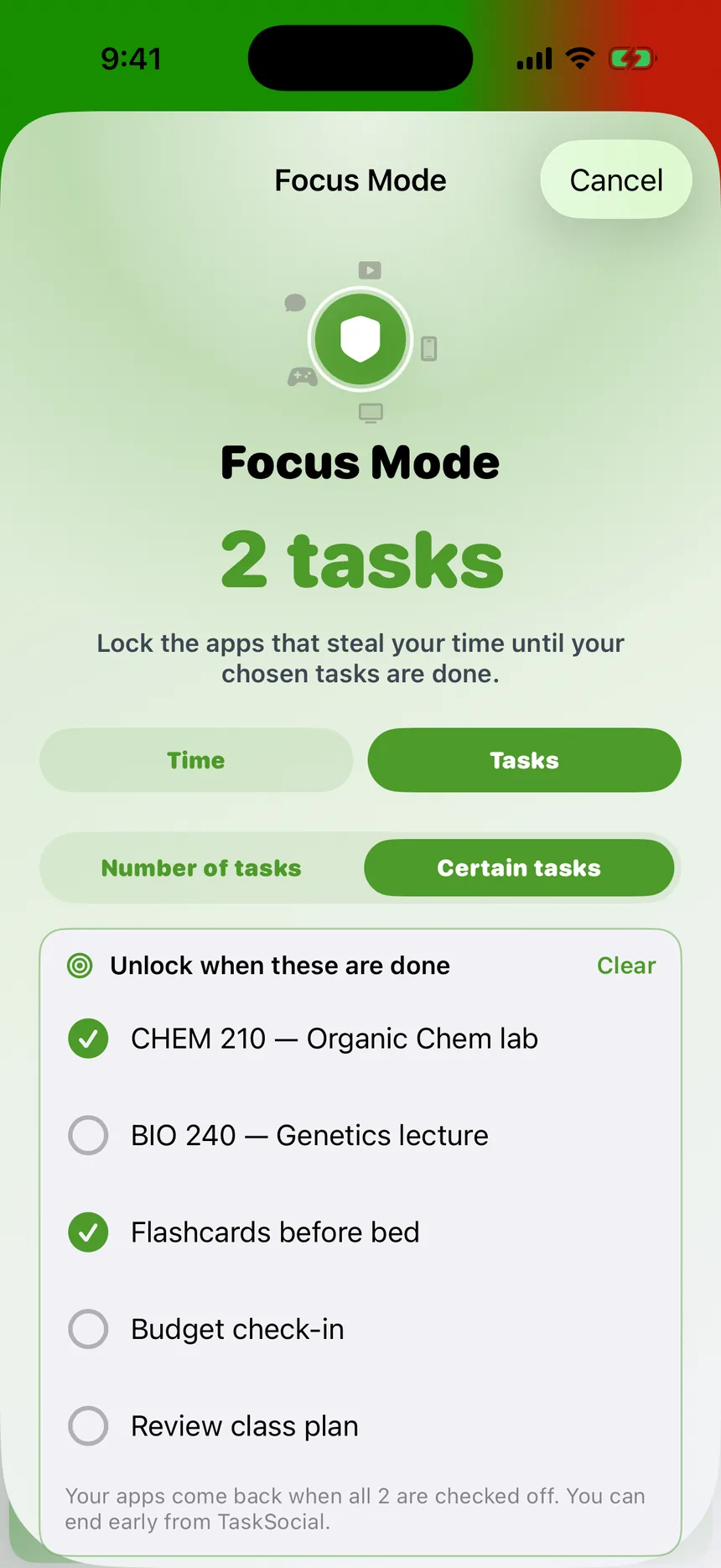
A video call with cameras on and mics muted works. So does locking in together in an app. In TaskSocial, you and a friend can start Focus Mode together: your distracting apps stay locked until your study tasks are done, and you can see each other go in and finish.
When it doesn't work
It falls apart when
- One of you keeps talking
- Phones are on the table
- Nobody said what they'd finish
- It's in a dorm room with a bed and a TV
It works when
- You both work quietly
- Phones are off and away
- You each said one goal out loud
- It's somewhere that only means work, like the library
Free tools for this
Common questions
What is body doubling?
Doing your work with another person present, in person or on video, even if they're working on something different. It makes it easier to start and harder to quit early.
Does body doubling work for studying?
For a lot of people, yes, especially for getting started and staying put. It works best when both people actually work quietly, with phones off and a clear goal for each block.
Is body doubling only for ADHD?
No. The term is common in ADHD communities, but anyone who struggles to start or stick with studying alone can use it.
Can I body double online?
Yes. A video call with cameras on and mics muted works, or lock in together in an app like TaskSocial, where your distracting apps stay locked until your tasks are done.
Keep going
Study with me in Study Hall
Lessons on how to study, live Ask Joe sessions, and a daily plan on your list in the TaskSocial app, with students who keep you honest.
Sources
- Zajonc, R. B. (1965). Social facilitation. Science, 149(3681), 269–274.
- Ward, A. F., Duke, K., Gneezy, A., & Bos, M. W. (2017). Brain drain: The mere presence of one's own smartphone reduces available cognitive capacity. Journal of the Association for Consumer Research, 2(2), 140–154.